Want to be in the loop?
subscribe to
our notification
Business News
DEVELOPERS MANIPULATE HOUSING FUND
Duc said that the trend had become popular since the Government relaxed conditions for low-income earners to lease or purchase affordable housing.
Few developers want to invest in low-cost housing because of low returns . This led the Government to offer incentives to get them involved in affordable housing, according to Kinh te & Do thi (Economic and Urban) newspaper.
In 2013, Viet Nam implemented a VND30 trillion (US$1.43 billion) national real-estate bailout package, offering preferential yearly interest of six per cent for low-income citizens to lease or buy homes.
The homes must measure less than 70 sq.m and cost less than VND15 million ($714 ) per sq.m.
There are also provisions allowing developers to get preferential loans to build the low-cost houses.
Since last November, low-income earners purchasing privately-built houses worth VND1.05 billion ($50,000 ) or less in approved urban projects have been entitled to financial assistance from the $1.43 billion national real-estate bailout programme.
Duc said that some developers undercharged for premises in written contracts so that they and the buyers qualified for the bailout package.
However, buyers still had to pay the real price of the premises.
Duc said that it was difficult to apprehend those committing the fraud as both parties colluded with each other to hide the real price.
Violations were recently detected in high-end housing projects, where the contract prices written down were much lower than they should have been.
Last week, the media reported that tens or billions of Vietnamese dong from the bailout package had been misused by home buyers and developers circumventing the law.
A home buyer in Ha Noi's Ha Dong District said that he spent almost VND1.2 billion ($55,000 ) to buy a 61sq.m apartment with a dining room, two bedrooms and two toilets, but the contract only showed VND 590 million ($27,000).
He later paid the extra money to the developer.
He said that the developer advised him to do this to take advantage of the bailout programme.
Vice chairman of the Civil Engineering Federation, Pham Sy Liem, said it was possible that home sellers, buyers and banks were all involved in the disbursement of preferential loans under real-estate bailout programme.
He said that banks were legally bound to take final responsibility for checking for fraud because it was their job to assess projects and decide on whether to make loans.
Nguyen Thanh Ha, a lawyer with SBLaw, said the Construction Ministry had issued circular 07/2013/TT-BXD that outlines punishment for those defrauding the scheme.
It states that individuals and organisations found cheating will be fined, forced to return their loans and terminate their credit contract with banks.
Source: VIR
Related News

MEMBER CORNER / PROMOTIONS
KNIC EXCLUSIVE GATHERING & NETWORKING 2026: A NEW MEETING POINT FOR INDUSTRIAL INVESTMENT IN HANOI
On October 2, 2026, KN Industrial City (KNIC) will host KNIC Exclusive Gathering & Networking 2026 at the National Innovation Center (NIC) in Hanoi. Building on a series of business networking and investment promotion activities in Ho Chi Minh City and Dong Nai, the event marks a new opportunity for KNIC to connect with businesses, investors, and partners in Northern Vietnam.
MEMBER CORNER / PROMOTIONS
KNIC ENGAGES WITH GOVERNMENT AND HIGH-TECH BUSINESS COMMUNITIES IN CHINA
From Beijing to Shandong, KN Holdings and KN Industrial City are continuing to expand their engagement with government authorities, trade promotion organizations, and high-tech business communities in China. In Beijing, the delegation met with the Center for International Economic and Technological Cooperation under the Ministry of Industry and Information Technology (MIIT), exchanging perspectives on industrial and technology cooperation between the two markets.

VIETNAM ECONOMY INVESTMENT
VIETNAM’S TRADE TOPS $825 BILLION BY MID-SEPTEMBER
Figures released on September 21 showed goods trade reached nearly $55 billion in the first 15 days of September alone, bringing cumulative turnover since the beginning of the year to more than $825 billion. The strong growth reflects robust trade flows, with demand for consumer goods and production inputs remaining high.

TECHNOLOGY
VIỆT NAM'S BUSINESSES MOVE TOWARDS AI AGENTS
Việt Nam’s AI landscape is entering a new phase as businesses move beyond generative AI (GenAI) tools designed to assist human users towards autonomous AI, agentic AI and AI agents that can take action with limited supervision, experts have said. The shift comes as Việt Nam seeks to accelerate science and technology, innovation and digital transformation under Politburo Resolution 57-NQ/TW, issued on December 22, 2024.
GARMENT / TEXTILE
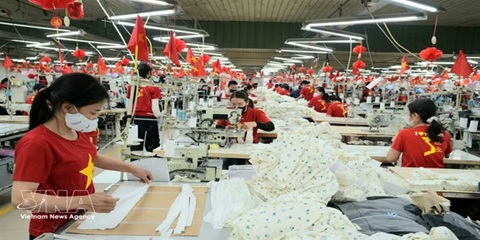
VIỆT NAM TARGETS $48 BILLION IN TEXTILE-GARMENT EXPORTS
Việt Nam’s textile and garment industry is facing both opportunities and challenges amid complex and unpredictable developments in the global market, prompting businesses to improve growth quality, optimise production costs and enhance adaptability in pursuit of an export turnover of about $48 billion this year. The target is considered an important milestone that requires concerted efforts from management agencies and the business community.
INFRASTRUCTURE / CONSTRUCTION / LOGISTIC / PORT
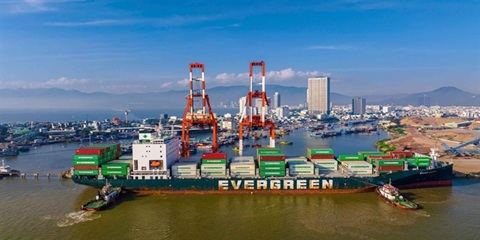
CUTTING LOGISTICS COSTS KEY TO BOOSTING EXPORTS
Reducing costs has become an increasingly urgent priority for import-export activities, particularly logistics costs, a conference in Hà Nội was told on Tuesday. According to Deputy General Director of the Ministry of Industry and Trade's Agency for Foreign Trade, Trần Thanh Hải, import-export activities has remained a bright spot for the economy in recent years, playing an important role and helping drive macroeconomic growth.
Events Sponsors






















